
 Image 1 of 1
Sunrise Solo
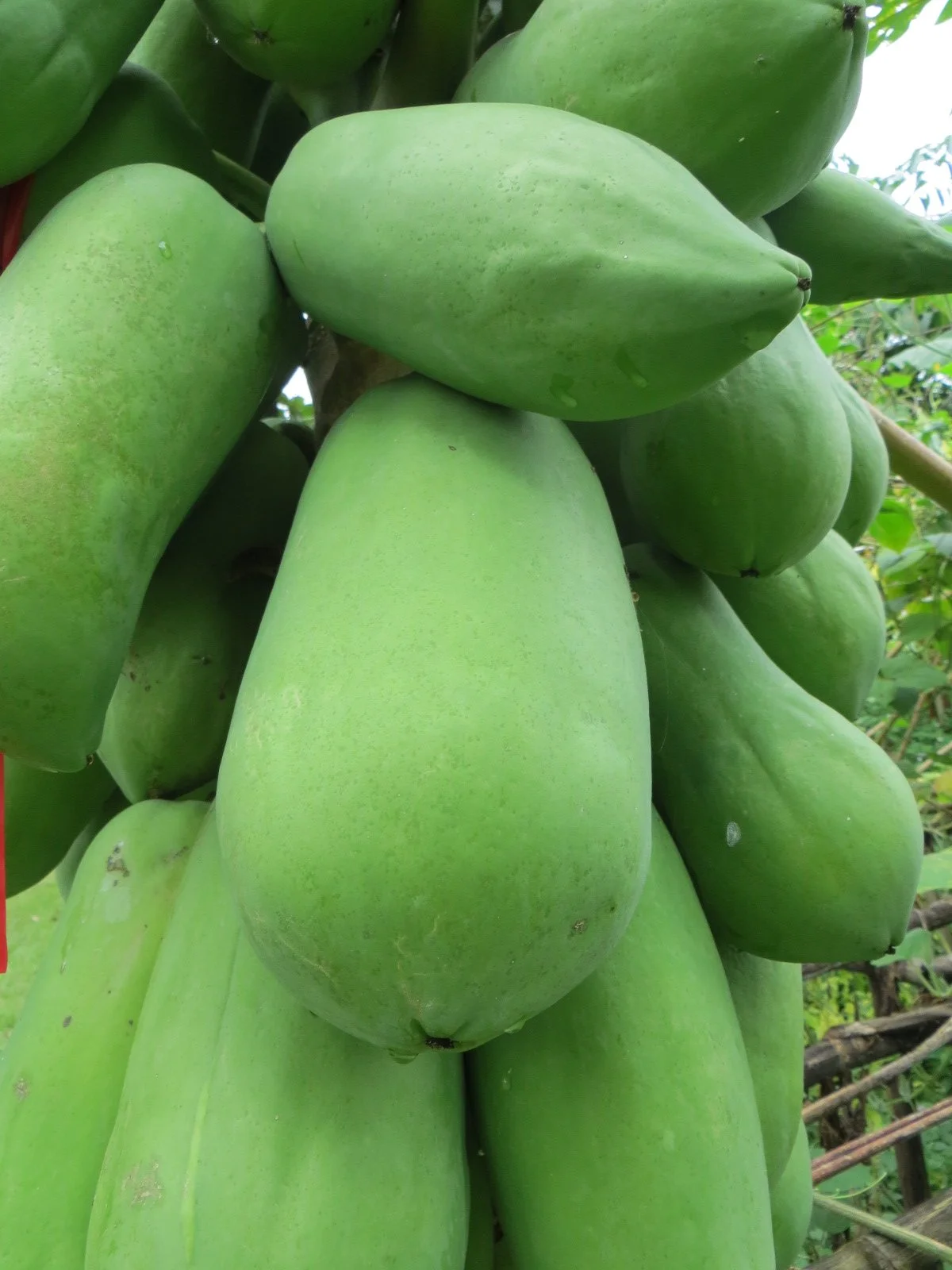
Short plant. Fleshy fruit.
Description
Papaya is grown throughout the tropics for its fruit. It is eaten fresh as a green and under-ripe vegetable and as a fruit once soft, and the color turns a yellowish-orange. The leaves can also be cooked and eaten as a vegetable. Papaya is grown from seed and is often initiated by sowing directly at 5 cm apart and 1 cm deep in rows 15 cm apart. At about 6-8 weeks, plants are transplanted into rows or ridges. Papaya prefers humid tropical climates with 1500 mm of rain or more but is sensitive to flooding. A shallow-rooted plant, Papaya is susceptible to wind damage. Plants are typically unisex, but some are male or female, with only female plants producing fruits. After plants reach the flowering stage, they can be reduced to one male flowering plant for every 15-25 female plants. Moths pollinate the trees.
Scientific Name: Carica papaya
Common Names: มะละกอ
Plant Information Sheet: Papaya
Sunrise Solo
Short plant. Fleshy fruit.
Description
Papaya is grown throughout the tropics for its fruit. It is eaten fresh as a green and under-ripe vegetable and as a fruit once soft, and the color turns a yellowish-orange. The leaves can also be cooked and eaten as a vegetable. Papaya is grown from seed and is often initiated by sowing directly at 5 cm apart and 1 cm deep in rows 15 cm apart. At about 6-8 weeks, plants are transplanted into rows or ridges. Papaya prefers humid tropical climates with 1500 mm of rain or more but is sensitive to flooding. A shallow-rooted plant, Papaya is susceptible to wind damage. Plants are typically unisex, but some are male or female, with only female plants producing fruits. After plants reach the flowering stage, they can be reduced to one male flowering plant for every 15-25 female plants. Moths pollinate the trees.
Scientific Name: Carica papaya
Common Names: มะละกอ
Plant Information Sheet: Papaya