
 Image 1 of 1
Australia
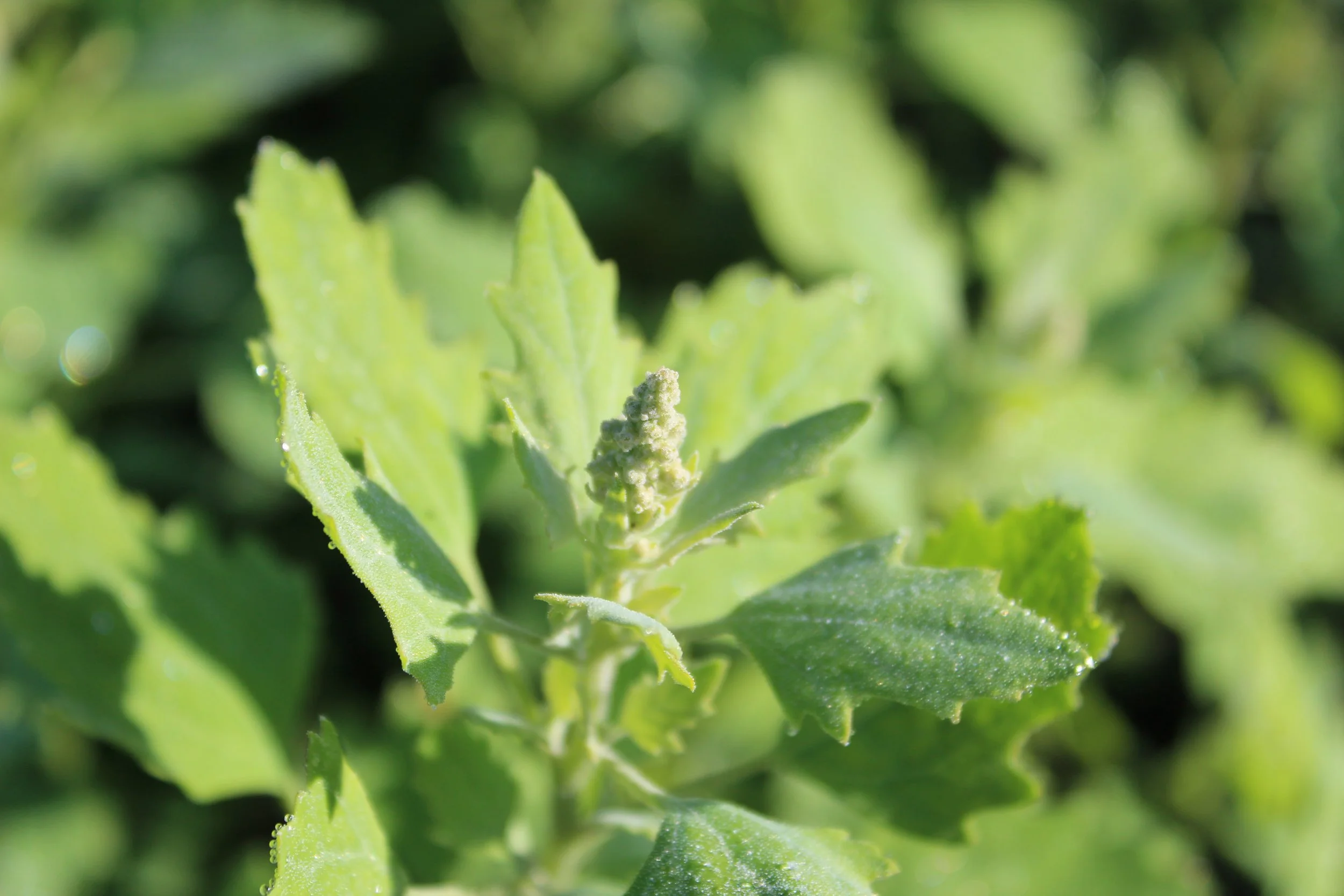
Green stem. Leaves and flowers are covered with a soft, white fuzz. Tan colored seeds.
Description
Quinoa is a flowering plant in the Amaranth family grown primarily for its edible seeds, which are particularly rich in protein, dietary fiber, B vitamins, and dietary minerals. Quinoa is not a grass but a pseudocereal related to spinach and amaranth originating in Northwestern South America. It grows about 1-2 m high and has broad, generally powdery, hairy, lobed leaves, typically arranged alternately. The woody central stem may be green, red or purple. The seeds are about 2 mm in diameter and of various colors—white, red or black, depending on the variety. Generally undemanding and altitude-hardy, Quinoa prefers cool climates with temperatures that vary between −4°C during the night to near 35°C during the day. Well-distributed rainfall during early growth and no rain during seed maturation and harvesting is optimal. Quinoa plants do best in sandy, welldrained soils with a low nutrient content, moderate salinity, and a soil pH of 6 to 8.5. The seedbed must be well prepared and drained to avoid waterlogging.
Scientific Name: Chenopodium quinoa
Common Names: ควินัว
Plant Information Sheet: Quinoa
Australia
Green stem. Leaves and flowers are covered with a soft, white fuzz. Tan colored seeds.
Description
Quinoa is a flowering plant in the Amaranth family grown primarily for its edible seeds, which are particularly rich in protein, dietary fiber, B vitamins, and dietary minerals. Quinoa is not a grass but a pseudocereal related to spinach and amaranth originating in Northwestern South America. It grows about 1-2 m high and has broad, generally powdery, hairy, lobed leaves, typically arranged alternately. The woody central stem may be green, red or purple. The seeds are about 2 mm in diameter and of various colors—white, red or black, depending on the variety. Generally undemanding and altitude-hardy, Quinoa prefers cool climates with temperatures that vary between −4°C during the night to near 35°C during the day. Well-distributed rainfall during early growth and no rain during seed maturation and harvesting is optimal. Quinoa plants do best in sandy, welldrained soils with a low nutrient content, moderate salinity, and a soil pH of 6 to 8.5. The seedbed must be well prepared and drained to avoid waterlogging.
Scientific Name: Chenopodium quinoa
Common Names: ควินัว
Plant Information Sheet: Quinoa